Working with Markers
Working with Markers in Well Correlation
- Creating and Managing Marker Sets:
In the Data Manager, right-click Markers and choose Add marker set to create a new set. Marker sets allow you to organize markers by stratigraphic sequence, lithology, or other criteria, facilitating more effective correlation.
2. Adding and Editing Markers:
Once a marker set is created, you can add individual markers by specifying their depth or time position.
You can also adjust marker positions, correct any inaccuracies, and delete markers as needed.
Markers can be grouped to represent specific intervals or sequences, further enhancing the clarity and usefulness of your correlation.
To access marker settings in the Data Manager, right-click a marker under Tops. The menu lets you adjust its age, specify whether it represents a horizon, fault or intrusion, rename or delete it, and create a map from it. Choose Show as table to open that marker across every well in a table; see Markers for the complete marker and zone table contents.
By default, each marker has the attributes MD, TVD and TVDSS in the Data Manager. These attributes are listed as sub-items under the marker in the Data Manager tree, and further custom attributes can be added next to them.
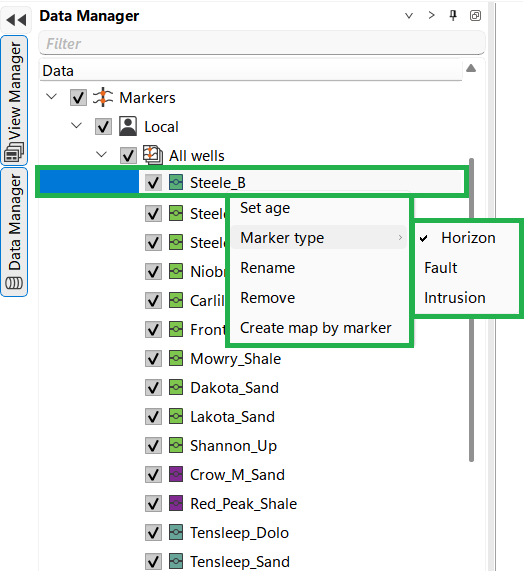
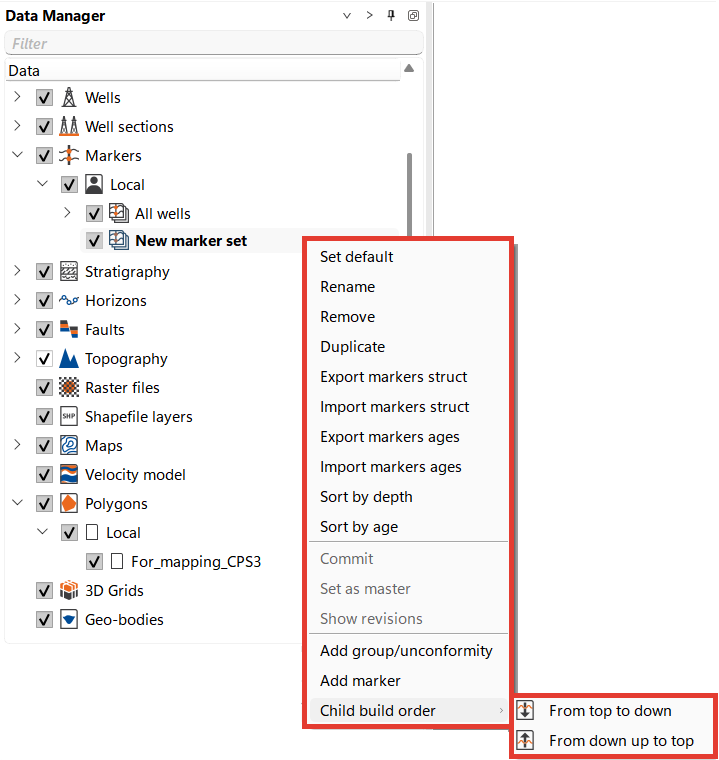
To configure a Marker set, right-click on it to open an expanded menu of options. It also offers Auto-create Zones and Create Zones manually..., which build zones from the tops of the set; see Markers for details.
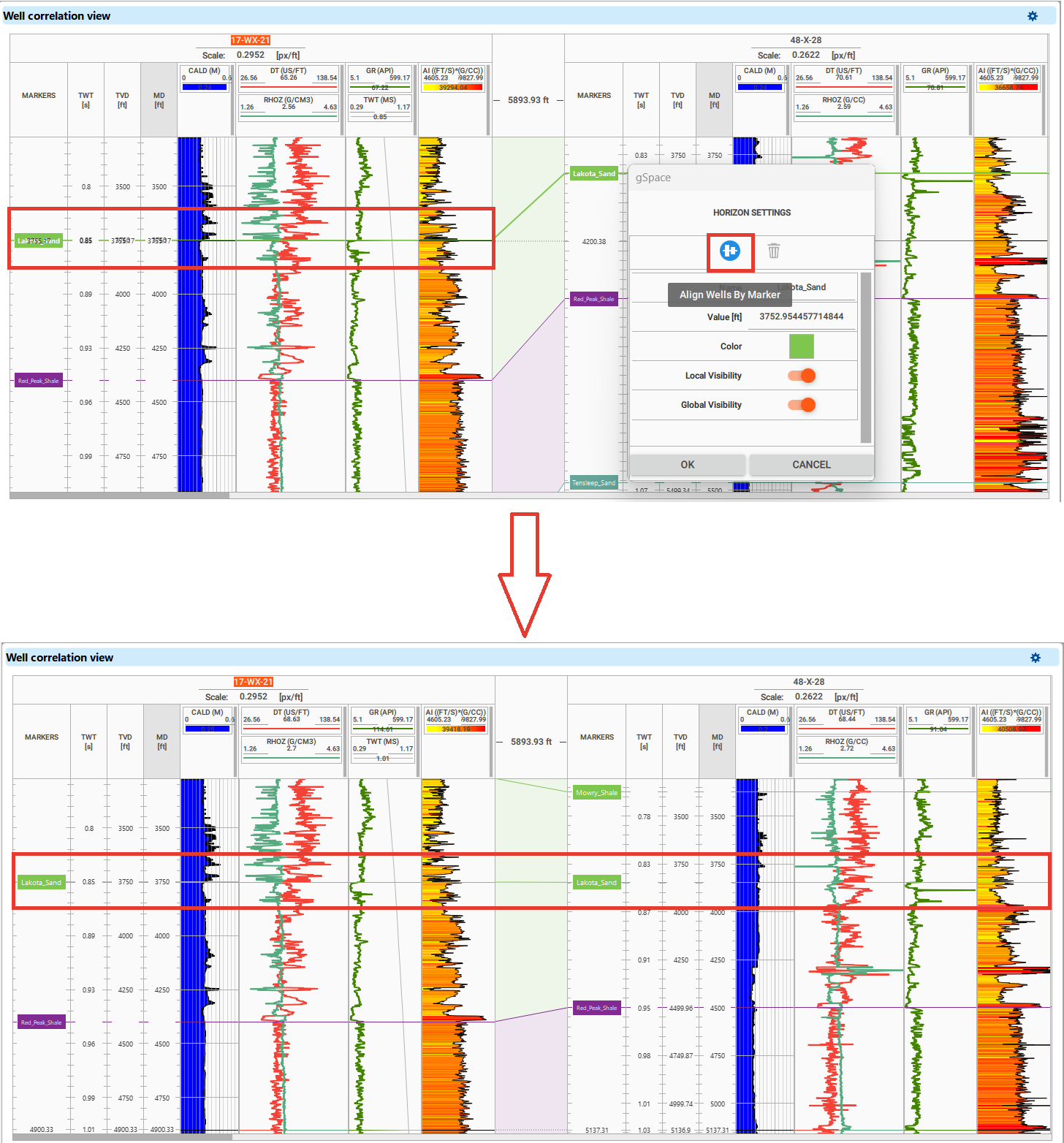
When performing correlation, you can align the wells either by a marker or by a depth/time value.
To align by a marker, move the cursor to the desired marker. When the two-way arrow appears and the marker line becomes bold, right-click, open the horizon settings, and choose Align Wells By Marker. You can also point to the marker line and press F.
To align by a depth/time value instead, point to that value on a well track or vertical axis and press F. Pressing F applies a new alignment; it does not toggle alignment off. To exit horizon selection mode, press Escape.
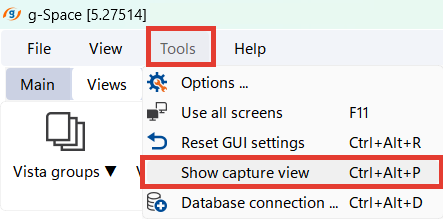
It's often helpful to compare the curve trajectory of one well with others. since the correlation is carried out from key wells with known markers to new ones. To facilitate this, you can use the "Ghost Curves" feature.
Navigate to the Main menu, select Tools, and then choose Show capture view, or press Ctrl+Alt+P. Highlight the section of the screen you wish to compare and drag it to the desired location. To exit this mode, simply press Escape.
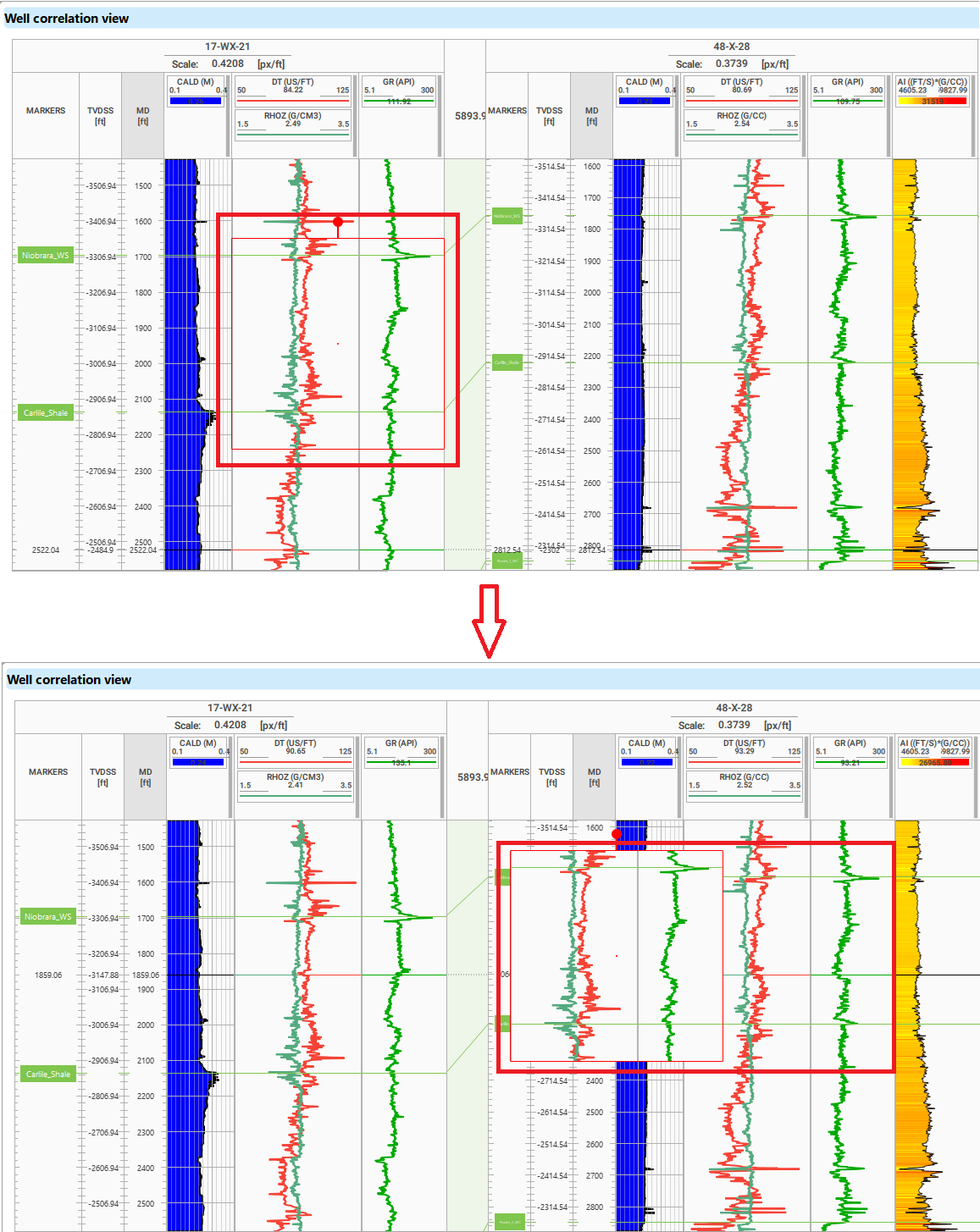
During well correlation, you might need to adjust the position of markers as you refine your geological model. To add or change marker positions:
- Adding a Marker: Right-click the track of the well at the depth or time point where you want the marker, and open the Add Markers submenu. It lists the markers the marker set already holds; choosing one adds that marker to this well at the right-clicked depth. Add New Marker... at the end of the submenu opens the ADD GLOBAL MARKER window, where you set Marker Name, Marker Color and Marker Position. Confirming that window creates the marker, places it in that well and makes it the active marker at once, so no separate activation step is needed.
- Correlating the Active Marker: While a marker is active, the mouse pointer shows that marker's name in the marker's own colour. Left-click the track of any other well to place the same marker at the clicked depth, so a marker is correlated across the section with one click per well; Ctrl+left-click on an existing marker line places it at that spot. Clicking an existing marker's line makes that marker the active one, creating another new marker transfers the active state to the newer marker, and Esc stops placing it.
- Changing Marker Position: To adjust an existing marker, click and drag it to the correct position within the well log. When you move the cursor close to a marker line, the cursor changes to a double-headed arrow. At this point, the horizon you click on will be highlighted, and its name will be displayed. Ensure the marker accurately represents the stratigraphic horizon or boundary you are correlating.